
request a consultation
Fill out our contact form and we’ll be in touch with you right away.
5-Star Reviews



 (813) 871-1300
Attorneys for T-Bone Collisions, Rear-End Accidents, Head-On Collisions, and More in Dunedin
When drivers do not use the appropriate levels of caution, they may cause car accidents. These collisions can cause devastating injuries that can disrupt victims’ lives, create ongoing financial hardship, and affect families for years to come. Fortunately, victims can take action to obtain compensation for the damages they have suffered, and a skilled attorney can help them protect their rights and their financial interests.
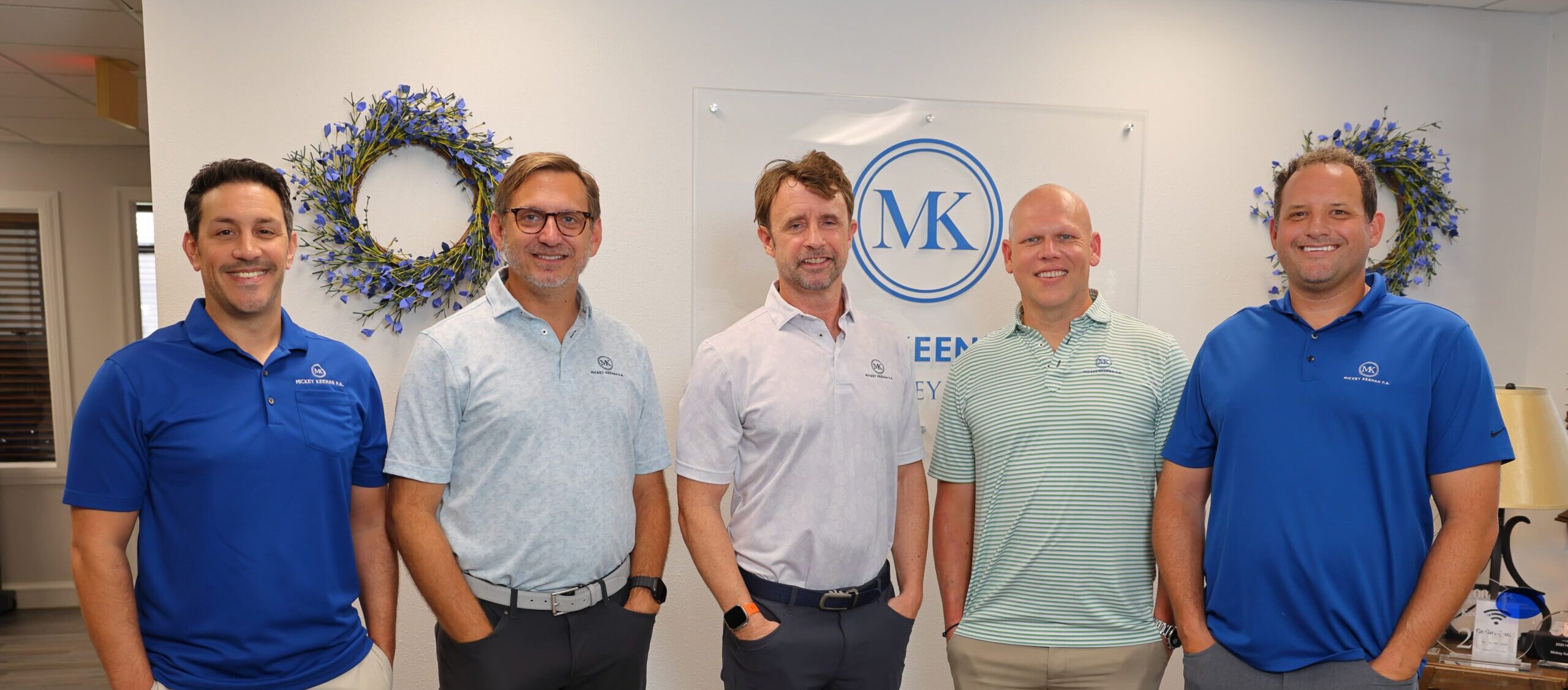
At Mickey Keenan, P.A., our lawyers have dedicated our careers to representing people who have been harmed by the negligence of others. We can address the injuries that have affected the lives of our clients, and we are willing to fight hard to make sure victims will receive maximum compensation.
T-Bone Collisions and the Dangers of Side-Impact Crashes
Accidents that occur when one vehicle hits another car or truck from the side can lead to catastrophic injuries. While the front and rear of a vehicle will include crumple zones that absorb the force of an impact, the sides of vehicles offer little protection. The direct impact with a vehicle can cause serious harm to anyone sitting on that side of a car or truck.
Intersections are the most common locations for T-bone accidents. Red light violations can cause devastating side-impact collisions when drivers enter intersections against and strike vehicles that are crossing in front of them. Some drivers may speed up when lights turn yellow, causing them to collide with vehicles that are proceeding through an intersection legally.
Stop sign violations may also lead to T-bone accidents. A driver who does not come to a complete stop and yield the right of way to vehicles that are already in an intersection may cause a broadside collision. Left-turn accidents may take place in situations where drivers do not yield to approaching vehicles. A collision may occur because a person does not have a large enough gap in traffic to turn safely or because they did not notice approaching motorcycles or cars.
T-bone accidents can also occur when vehicles pull out of parking lots, driveways, or side streets without yielding to traffic. Drivers may make improper U-turns and strike other vehicles. In parking lots, drivers may back out of spaces without checking for vehicles driving behind them.
The injuries that occur in T-bone accidents can be severe. A direct impact with the side of a vehicle can cause people on the side of impact to suffer chest injuries such as broken ribs or collapsed lungs, abdominal trauma affecting the liver or intestines, internal bleeding from damaged organs, head and brain injuries, pelvic fractures, or damage to the back and spinal cord. occur when occupants’ heads strike the intruding door, window frame, or B-pillar during the collision.
Rear-End Collisions and Their Consequences
Collisions in which one vehicle strikes the back of another vehicle are some of the most common types of car accidents. When rear-end accidents occur, the driver of the rear vehicle will typically be at fault because they failed to maintain a proper distance, did not pay attention, or were traveling at an unsafe speed.
Distracted driving is the cause of many rear-end collisions. Looking away from the road to use a phone or navigation device, adjust vehicle controls, or perform other activities may cause a person to fail to notice changes in traffic. Rear-end collisions may also be caused by tailgating, which may not provide a driver with enough space to stop when necessary. Speeding can lead to accidents when drivers do not have enough time to slow down before striking another vehicle from behind.
Weather conditions like rain or fog may require drivers to adjust speed and avoid following too closely behind other vehicles. Drivers who fail to make these adjustments may be responsible for causing rear-end collisions when they cannot stop in time. Mechanical problems like worn brakes may also play a role in rear-end collisions, and a vehicle owner may be responsible for neglecting to perform the proper maintenance.
Rear-end collisions may cause whiplash injuries when the force of impact leads a person’s head to snap backward or forward violently. These rapid movements can damage muscles, tendons, ligaments or nerves, which can lead to chronic pain or headaches, limited range of motion, and other ongoing symptoms. Back injuries may occur, and they could include soft tissue damage or herniated discs in the spine. If these injuries affect spinal nerves, a person may experience pain, numbness, or weakness in the legs or other parts of the body.
Head injuries may affect a person who suffers a blow to the head during a rear-end collision. Psychological trauma can also be a factor in rear-end collisions, and a person may experience issues such as post-traumatic stress disorder or anxiety about driving.
Head-On Collisions and Catastrophic Injuries
When vehicles collide head-on, the occupants of the vehicles can suffer severe injuries. Unsafe passing is responsible for causing many of these collisions. Drivers may attempt to pass other vehicles unsafely, putting them in the path of traffic that is approaching without being able to avoid a collision.
Distracted driving may lead to head-on accidents. A person who looks away from the road for several seconds may allow their vehicle to drift to the other side of the road. By the time they look up, a head-on collision may be unavoidable.
Drunk driving is also a factor in many head-on crashes, since intoxication may lead a driver to lose control and cross into oncoming lanes. Drowsy driving may lead to head-on crashes when a person falls asleep at the wheel.
Head-on collisions may cause severe injuries, and these situations often result in fatalities. Head injuries may cause significant brain damage that can have lifelong effects. Multiple fractures may occur throughout the body, including leg fractures, arm and wrist fractures, rib fractures, and facial fractures. Trauma to the chest may cause damage to the heart or other organs. Spinal cord injuries may lead to permanent paralysis, including paraplegia or quadriplegia.
Contact Our Dunedin, FL Car Accident Attorneys
The attorneys at Mickey Keenan, P.A. can provide the skilled legal representation needed to help victims of car accidents obtain financial compensation. To learn more about how we can assist with these cases, contact our Dunedin auto accident lawyers at 813-412-8226 for a free consultation. With our extensive legal experience and our history of success recovering compensation for injury victims, we can provide the legal help you need to maximize your compensation.